



Startup Funding For Small Businesses
Getting money to start a business is the first big problem every owner faces. You have a good idea. You have a plan. But you do not have the cash to bring that plan to life. This is true for almost every small business owner in India. Whether you want to open a small factory, start a food brand, or build a service based company, you need funding.
In this article, we will look at every way a small business owner can get startup funding. We will not use hard words. We will not copy paste from foreign blogs. We will talk about what works in India, on the ground, for startup funding for small businesses.
What Is Startup Funding?

Startup funding simply means the money you collect to start or grow your business. This money pays for your first stock, your shop rent, your worker salaries, your machines, and your marketing. Without this money, your idea stays only on paper.
But here is the truth. Most new business owners do not know where to look for this money. They think only banks give money. Or they think they need a big office and a fancy presentation to get funds. This is wrong thinking. In India, small business funding comes from many places. Some are formal. Some are informal. But all of them work if you know how to ask.
Why Small Business Owners Struggle To Get Funding
Before we look at the solutions, we must look at the problems. When a small business owner goes to get money, they face three big walls.
First, banks ask for guarantee. They want a property, a fixed deposit, or a big asset to hold as security. Most small business owners do not have this. Especially if they are starting for the first time.
Second, the paperwork is too much. Banks and government schemes ask for many papers. Income proof, business plan, tax records, bank statements. A new business has none of these.
Third, the fear of loan. Many owners do not want to take a loan because they fear they cannot pay it back. This fear stops them from even trying. And without trying, no business grows.
So the real skill is not just finding funding. The skill is finding the right kind of funding for your current situation.
Read Also: Venture Capital Vs Private Equity Exits
Types Of Startup Funding For Small Businesses
We will now look at every type of funding available to a small business owner in India. Some are easy to get. Some take time. Some cost nothing to return. Some cost interest. You have to pick based on your need.
1. Self Funding Also Called Bootstrapping
This is the most common way in India. You use your own savings. You take help from your family. You sell something you own to raise cash. This method has one big benefit. You do not owe anyone. You do not pay interest. You do not give any share of your business.
But there is also a problem. Your own money is limited. If your business needs one lakh rupees, self funding works. If it needs twenty lakhs, self funding may not be enough.
Best for: very small businesses, home based businesses, testing a new idea.
2. Loans From Government Banks
Public sector banks in India have many loan schemes for small business. The most famous one is Mudra Loan. Under Mudra, you can get a loan from fifty thousand to ten lakh rupees without any guarantee. You only need a proper business plan. The interest rate is between eight to twelve percent.
There is also Standup India loan for women and for scheduled caste and scheduled tribe business owners. This loan gives ten lakh to one crore rupees for starting a new business.
The problem with bank loans is time. It can take thirty to forty five days for the money to come. And the paperwork is strict. But if you have patience, bank loans are safe and clear.
3. Online Lending Apps And Small Finance Banks
In the last five years, many online apps have started giving small business loans. Names like Razorpay Capital, BharatPe, and Lendingkart are popular. They give loans from fifty thousand to five lakh rupees. The money comes in two to three days. You do not need a physical bank visit.
But there is a catch. The interest rate is higher than a normal bank. Sometimes it goes up to eighteen to twenty percent. Also, these apps check your digital history. If you use a payment app or a business current account regularly, you get a higher chance of loan.
Best for: shop owners, small traders, and people who need money fast.
4. Government Grants For Small Business
A grant is money that you do not have to return. Yes, you read that right. No interest. No monthly EMI. No share of your business. But grants are very hard to get because many people apply. The government gives grants only for specific types of work.
For example, the MSME Ministry gives grants for businesses that use new technology. The Khadi and Village Industries Commission gives grants for village based manufacturing. Startup India gives a grant of ten lakh rupees to businesses that solve a real social problem.
To get a grant, you need a strong application. You must show exactly where the money will go. And you must agree to a yearly check by government officers.
Best for: social businesses, village industries, women led manufacturing units.
5. Angel Investors
An angel investor is a rich person who gives money to a new business. In return, they take a small part of your business. For example, if an angel gives you ten lakh rupees, they may ask for ten percent ownership of your company.
In India, angel investing is growing fast. Cities like Bengaluru, Mumbai, Delhi have groups of angel investors. They meet every month. They listen to new business ideas. If they like your idea and your passion, they give money.
But there is a cost. You lose some control. The angel will want to sit in your meetings. They will want to see your accounts. Some angels also help you with advice and contacts, which is good. But some angels may push you to grow too fast.
Best for: new age businesses, tech based ideas, unique products with big market.
6. Crowdfunding
Crowdfunding means you ask many people to give small amounts of money. Each person gives maybe five hundred or one thousand rupees. When two thousand people give, you get a good amount. You can do crowdfunding on websites like Ketto, Milaap, and FuelADream.
There are two types. In donation crowdfunding, people give money without taking anything back. You use this for social causes or for helping a community. In reward crowdfunding, you give a small gift. For example, if you are starting a pickle brand, you give a free bottle of pickle to every person who gives five hundred rupees.
Crowdfunding works best when you have a good story. People want to feel connected to your business. They want to see a real face and a real need.
Best for: creative businesses, social projects, local food or craft brands.
7. Business Loan From NBFCs
NBFC means Non Banking Financial Company. These are companies like Bajaj Finance, Tata Capital, and HDB Financial Services. They give business loans faster than a normal bank. But their interest rate is higher by two to three percent.
The good part is that NBFCs are more flexible. If your credit score is low, they still may give you a small loan. They look at your business cash flow more than your past history.
Best for: businesses that are already running and need more money to buy stock or machines.
8. Peer To Peer Lending
This is a new method in India. Websites like Faircent and LenDenClub connect a person who needs money with a person who has money. It is like a loan from a stranger. The website takes a small fee. The lender gets interest. You get your loan.
The risk is that peer to peer lending is not fully controlled by RBI in the same way as a bank. So if you miss a payment, the lender can be very aggressive. Also, the interest rate can go up to twenty five percent.
Best for: very small amounts under two lakh rupees.
You May Also Like: Funding Options For Early Stage Startups In Tier 2 Cities India
How To Choose The Right Funding For Your Business?
Now you know eight ways to get startup funding. But how do you pick one? Here is a simple way to decide.
First, ask yourself how much money you need. If it is under one lakh, use self funding or family help. If it is between one lakh to ten lakh, look at Mudra loan or online lending app. If it is above ten lakh, look at NBFC, angel investor, or government grant.
Second, ask yourself how soon you need the money. If you need it tomorrow, online lending app is your only choice. If you can wait forty days, go to a bank.
Third, ask yourself if you can pay back every month. If yes, a loan is fine. If not, try a grant or crowdfunding.
Fourth, ask yourself if you are okay with sharing your business. If yes, angel investor is good. If no, stick to loans or self funding.
Common Mistakes Small Business Owners Make With Funding
Even when money is available, many owners make simple mistakes. Here are the most common ones.
Mistake One: Taking too much money. Many owners think big money means big success. This is wrong. If you take more money than you need, you waste it on things that do not matter. You also pay more interest. Always take exactly what you need for the next six months.
Mistake Two: Not reading the fine print. Loan papers have many hidden things. Late payment fee. Prepayment fee. Processing fee. Insurance charge. Read every line before you sign. If a word looks hard, ask a friend or a chartered accountant to explain.
Mistake Three: Mixing personal and business money. This is a very common problem in India. You take a loan for your business but you spend it on your home. Or you put your personal savings into business without keeping any record. This creates big trouble during tax time. Always keep separate accounts.
Mistake Four: Giving up too early. When one bank says no, many owners stop trying. They think no one will give them money. But the truth is that every lender has different rules. One bank wants property guarantee. Another bank only wants business proof. Keep trying at least five places before you give up.
Documents You Must Keep Ready For Any Funding
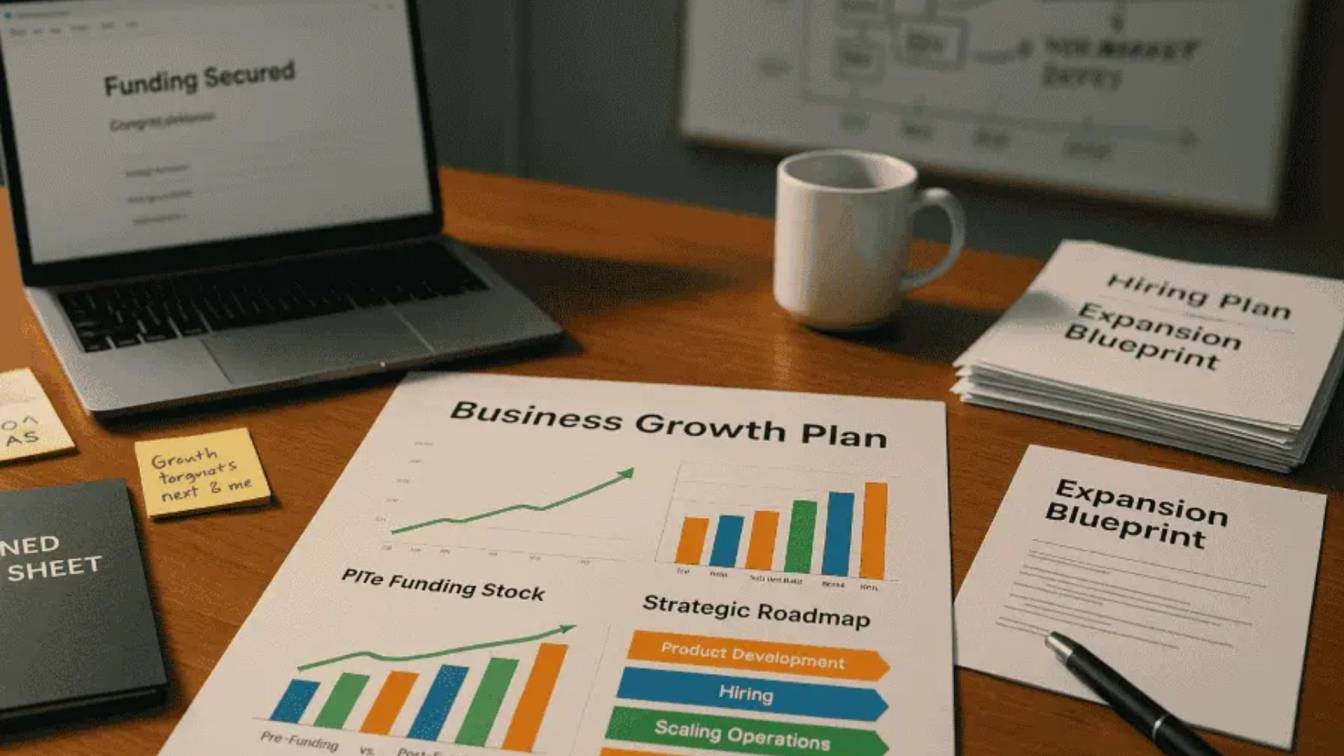
To save time, keep these documents always ready in a folder. Even if you are not applying for funding today, keep them updated.
- Your Aadhar card and PAN card
- Your business address proof (rent agreement or electricity bill)
- Your last six months bank statement of your personal and business account
- A one page summary of your business idea
- A simple list of how you will spend the money
- Your GST registration if you have one
- Any past loan statement if you have taken a loan before
If you keep these papers ready, you can apply for funding in one day.
How To Get A Higher Chance Of Approval
Banks and online lenders check three things before they say yes.
One, your credit score. In India, CIBIL score is the most common. A score above 750 is good. Below 650 is risky. If your score is low, first take a small loan from a friend or a micro finance company and pay it back on time. This builds your score slowly.
Two, your business age. Lenders like businesses that are at least two years old. If your business is new, start with a smaller loan. After two years of on time payment, bigger loans become easy.
Three, your cash flow in the bank account. If your bank account shows regular money coming in every month, lenders feel safe. Even if the amount is small, regular flow is good.
Real Example Of A Small Business That Got Funding
Let me tell you about a real business. A woman in Pune started making healthy snacks from millet. She had no money for a big kitchen. She had no property to give to a bank. She started with twenty thousand rupees from her own savings. She made small packets and sold them to neighbours.
After six months, her snack was selling well. But she needed money to buy a packing machine. She applied for a Mudra loan of two lakh rupees. She went to a government bank with her bank statement, her Aadhar card, and a one page business plan. The bank officer asked her to show her product. She took a sample packet. She showed her sale records from a simple startup funding for small businesses.
The bank said yes. She got the loan in twenty five days. She bought the machine. Today her business sells on Amazon and in five local shops. She pays her loan EMI every month on time.
This is not a big story of crores of rupees. This is a real story of how small funding works in India.
Final Words
Startup funding for small businesses is not a secret trick. It is a step by step process. You start small. You keep your papers ready. You try one way. If it does not work, you try another way. You do not give up after two rejections.
The most important thing is to have a clear use of money. If you can tell a lender exactly where each rupee will go, they will trust you. Even a small bank, a small NBFC, or a small online app will listen to you.