


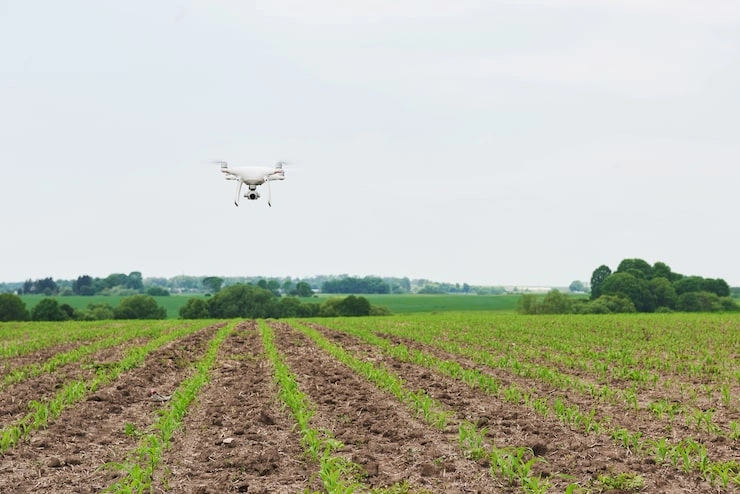
Drone Technology In Sustainable Farming
Farming in India has always been hard work. Our farmers wake up before the sun. They work in the heat. They worry about rain and pests. But now, something new is helping them. Small flying machines called drones are changing how farming works in our country.
Drones are not just toys or cameras for taking pictures from the sky. They are becoming important tools for farmers. They help save water. They help use less chemicals. They help grow more food. This is called sustainable farming. It means farming that can last a long time without hurting the land or the people who work on it.
In this article, we will look at how drone technology is helping Indian farmers. We will see real examples from different states. We will understand how these machines work. And we will learn why they matter for the future of food in our drone technology in sustainable farming.
What Are Agricultural Drones?
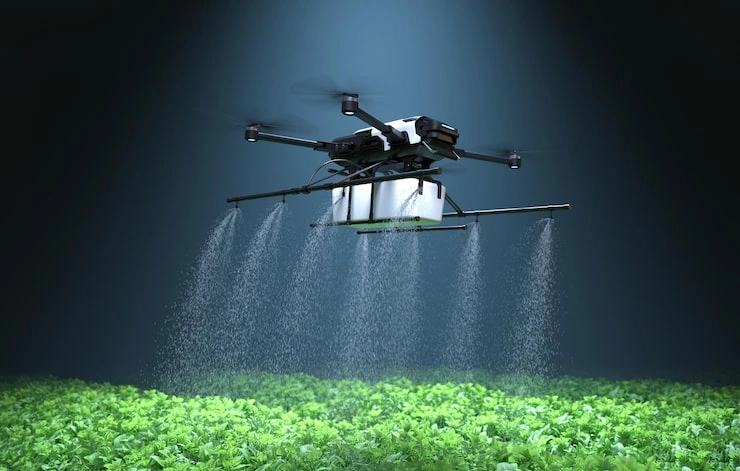
Agricultural drones are flying machines that farmers can use in their fields. They come with different tools. Some have cameras that can see things our eyes cannot see. Some have tanks for spraying liquid. Some can drop seeds into the soil.
The global market for agricultural drones is big. It is worth about 32.4 billion dollars . This shows that many countries are using this technology. India is one of them.
These drones are not like the toys we see in shops. They are serious machines built for farm work. They can fly over large areas quickly. They can cover land that would take a worker many hours to walk across.
Read Also: Agrivoltaics Farming With Solar Panels
How Drones Help With Sustainable Farming?
Sustainable farming means taking care of the land while growing food. It means not using too much water. It means not putting too many chemicals on crops. It means keeping the soil healthy for the next generation.
Drones help with all of these things. Here is how.
Saving Water
Water is precious in India. Many parts of our country do not have enough water for farming. Drones can help save water in a big way.
When farmers use drones for spraying, they use much less water than traditional methods. Women drone pilots in Haryana, Uttar Pradesh, Punjab, and Chhattisgarh have shown that drone spraying can reduce water use by up to 90 percent .
Think about that number for a moment. Ninety percent less water. This means farmers can grow crops even when water is scarce. It also means more water is left for other needs.
Using Fewer Chemicals
Indian farmers use pesticides and fertilizers to protect their crops and help them grow. But too many chemicals are bad for the land. They can wash into rivers. They can harm the soil. They can make people sick.
Drones can help reduce chemical use. The machines are very precise. When a drone sprays, it puts the chemical exactly where it is needed. It does not waste chemicals by spraying areas that do not need treatment.
This precision reduces the total amount of chemicals used on farms. A study showed that drones can reduce fertilizer and nutrient use by 75 percent . That is a huge saving. It saves money for the farmer. It also protects the environment.
One startup in Kerala called Fuselage Innovations has shown what is possible. The company was started by two siblings who wanted to help farmers after the Kerala floods. Their drones help increase crop yield by 25 to 35 percent while using 75 percent less fertilizer .
Saving Time and Labour
Indian farming relies on labour. Many people work in the fields. But finding workers is becoming harder. Young people are moving to cities. Farm work is seen as difficult and not well-paid.
Drones can do some farm work much faster than humans. Spraying a field by hand can take a whole day for a team of workers. A drone can do the same job in minutes.
In Haryana, a woman named Nisha Solanki became the state's first certified drone pilot. She has shown farmers how drones can spray a field in about five minutes per acre . This is much faster than traditional methods.
This speed helps farmers. They can treat their crops quickly when pests appear. They do not have to wait for workers. They do not have to worry about labour shortages.
Making Farms More Productive
Sustainable farming is not just about saving resources. It is also about growing enough food. India needs to feed a huge population. We cannot afford to grow less food.
Drones can help farmers get more from their land. The machines can spot problems early. They can find areas where crops are stressed. They can tell farmers where to add fertilizer. All of this helps the crops grow better.
The numbers are impressive. Farmers who use drone technology have seen their profits triple . In Kerala, over 8,400 farmers have used drones on their land. The total area covered is over 4,100 hectares .
Helping in Tribal and Remote Areas
India has many tribal areas where farming is hard. These areas often lack good roads and infrastructure. Traditional farming methods do not work well there. But drones can help.
In Chhattisgarh, 15 women farmers in tribal areas started using drones. They are called Lakhpati Didis. They covered over 500 acres of farmland. Their work helped farmers increase yields from 24 to 30 quintals per acre. That is a big improvement. The farmers also saw their profits go up by nearly 15 percent .
Real Stories of Drone Farming in India
Numbers are good. But stories are better. Let us look at real people who are using drone technology in their farms.
Shabina Khatoon - The Drone Didi from Ayodhya
Shabina Khatoon is a 36-year-old woman from a village in Ayodhya district, Uttar Pradesh. She comes from a farming family. For many years, she did traditional farming. She earned only about 2 to 2.5 lakh rupees per year .
Then things changed. She started working with the Krishi Vigyan Kendra in Ayodhya. She learned about modern farming methods. She also got a drone for free under the government's NAMO Drone Didi Scheme .
This changed her life completely. She started using the drone for spraying. She also started offering spraying services to other farmers. She charges about 400 rupees per acre. Her services became very popular. Farmers liked how fast the drone worked. They also liked how it saved water and chemicals.
Now, Shabina earns between 8 to 10 lakh rupees per year. That is almost four times what she used to earn . She has also trained 80 women farmers in drone operation. Six women from her village self-help group are now working as Drone Didis .
What makes this story special? Shabina did not have a big farm. She did not have a lot of money. She just had the desire to learn and work hard. The drone gave her a chance to grow.
Women Pilots in Haryana and Uttar Pradesh
Women farmers across India are embracing drone technology. In Haryana, 50 rural women were trained as certified drone pilots. These women came from different backgrounds. Many were homemakers. Some were small farmers.
One of these women is Sharmila Yadav. She used to work in her home. After training, she started flying drones for spraying. In just five weeks, she covered over 150 acres of farmland twice. She earned close to 50,000 rupees from this work .
In Varanasi, Uttar Pradesh, a group of nine women formed a drone service company. They trained at a drone academy. Over ten months, they covered more than 2,500 acres. They earned revenues of 3.38 lakh rupees .
These stories show something important. Drones are not just for rich farmers. They are also for ordinary people. They can create jobs. They can give women new opportunities. They can help entire communities.
A Family Business in Kerala
Devika and Devan Chandrasekharan are siblings from Kerala. They are both engineers. In 2020, they started a company called Fuselage Innovations . The idea came after the Kerala floods. The floods had destroyed so much farmland. The siblings wanted to help.
They built two drones. One drone maps the farm. It sees which plants need help. It spots where there are pests or nutrient problems. The other drone does the work. It sprays exactly where it is needed.
Their drones are now used across India. They have worked with over 8,400 farmers. They have covered 4,100 hectares of land. Their work has helped farmers get much better yields.
The company charges between 2,000 and 5,000 rupees per acre for their services . This might sound like a lot. But the results are worth it. Farmers get more crops. They use less chemicals. They save money in the long run.
Different Ways Drones Are Used on Farms
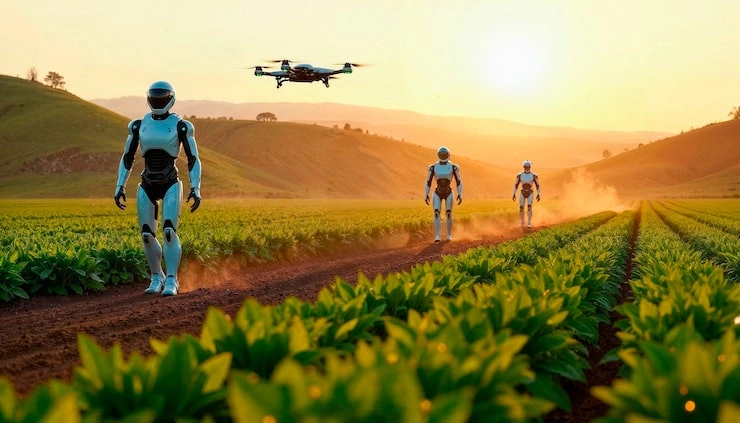
Drones can do many different jobs on farms. Let us look at the most important ones.
Spraying Pesticides and Fertilizers
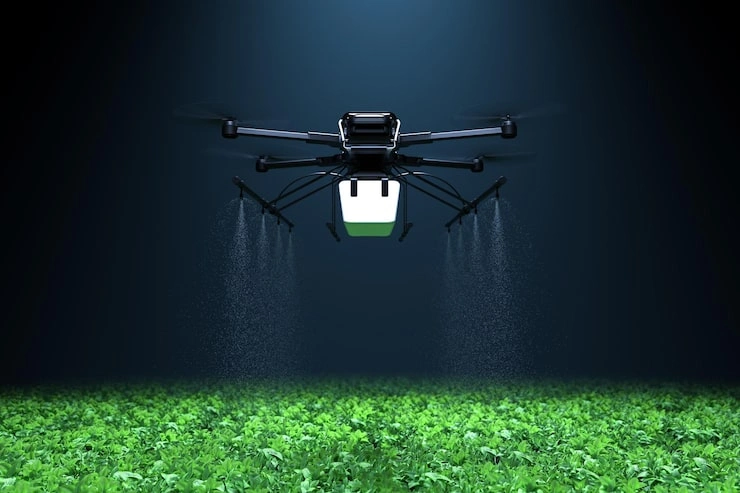
This is the most common use of drones in Indian farms. The drone carries a tank full of liquid. It flies over the fields. It sprays the liquid where it is needed.
Traditional spraying has many problems. Workers often get exposed to dangerous chemicals. This can make them sick. The spraying is also not very precise. Many areas get too much spray. Other areas get too little.
Drones solve these problems. The spraying is more precise. Less chemical is wasted. Workers do not have to stand in the fields breathing in the spray. They can stand at a safe distance.
The International Rice Research Institute has been working on drone-based spraying. Their research shows that drones can do this job well. They can make farming more efficient and less harmful .
Crop Monitoring
Farmers need to know how their crops are doing. Are the plants healthy? Do they need water? Are there pests? Answering these questions used to take a lot of time. Farmers would walk through their fields. They would check plants one by one.
Drones make this much easier. A drone with a camera can fly over the whole field quickly. The camera can see things that the naked eye cannot. It can spot plants that are stressed. It can find areas where the soil is not good.
The technology works because plants reflect light differently when they are healthy versus when they are stressed. Drones can see these differences. They can show farmers exactly where there is a problem.
A study found that using drones for crop monitoring can help reduce pesticide use by 30 percent . This is because farmers only spray areas that need it. They do not spray the whole field.
Mapping Farm Land
Drones can make maps of farm land. These maps are very detailed. They show the boundaries of the field. They show the different types of soil. They show where water collects. They show where crops are growing well and where they are not.
These maps help farmers plan better. They can decide where to plant different crops. They can plan irrigation systems. They can see which parts of their field are most productive.
The maps are made using special cameras. These cameras take pictures from the sky. Software then puts these pictures together to make a detailed map.
Planting Seeds
Some drones can also plant seeds. They shoot seeds into the soil. This is called drone seeding. It is still a new technology. But it has big potential.
Drone seeding can be used in difficult areas. Areas where it is hard to walk. Areas that were damaged by floods or fires. The drone can drop seeds quickly. It can cover large areas.
This technology is not yet common in India. But it is likely to grow in the coming years.
The Technology Behind the Drones
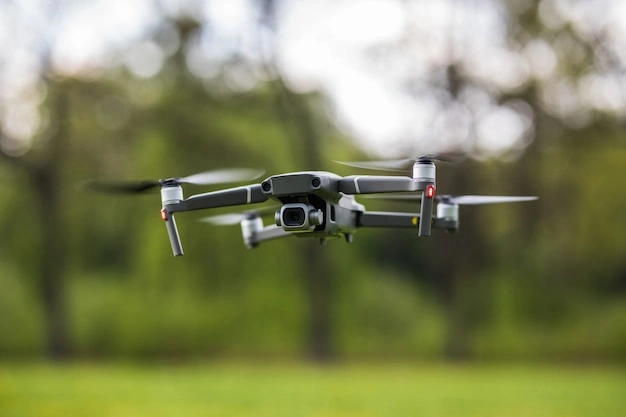
Drones use different technologies to do their work. These technologies work together to make the drones effective.
Cameras and Sensors
The cameras on agricultural drones are special. They can see beyond what our eyes can see. They can see infrared light. They can see near-infrared light. They can see thermal images.
These cameras give farmers a lot of information. They can see plant health. They can see soil moisture. They can see temperature differences.
Some drones also have sensors that measure other things. They measure wind speed. They measure humidity. They measure temperature. All this information helps farmers make better decisions.
Artificial Intelligence
AI is used to understand the images from drones. The AI looks at the pictures. It finds patterns. It recognizes problems.
For example, the AI can look at a field of rice. It can see which plants are healthy. It can see which plants are stressed. It can tell the farmer exactly where to add fertilizer.
AI also helps drones fly better. It helps them avoid obstacles. It helps them stay on course. It helps them spray more precisely.
GPS and Navigation
Drones need to know where they are. They use GPS for this. The GPS tells the drone its exact position. The drone can then fly precisely over the field.
The navigation systems also help plan the flight path. The farmer tells the drone where to go. The drone figures out the best route. It flies that route without the farmer having to control it.
Government Support for Drone Farming
The Indian government is supporting drone use in farming. They have several programs for this.
Drone Didi Scheme
The Drone Didi Scheme is run by the government of India. It gives drones to women's self-help groups. It trains women to use them. It helps them offer services to farmers .
This scheme has been successful in many states. We saw the example of Shabina Khatoon in Ayodhya. She got her drone through this scheme. She is now helping other women learn.
The scheme has a bigger goal. It wants to make farming more modern. It also wants to empower women. Women who learn drone skills can earn money. They can become independent. They can become leaders in their communities.
Training Programs
Many training programs have started for drone pilots. These programs are run by various institutions. They include Krishi Vigyan Kendras. They include agricultural universities. They include private companies.
The training is both practical and theoretical. Trainees learn how to fly drones. They learn about safety. They learn about spraying. They learn about maintenance.
In Haryana, 50 rural women have been trained through these programs . They are now working as drone pilots. They are earning money. They are helping other farmers.
Support for Startups
The government is also supporting drone startups. Companies like Fuselage Innovations have received support. This support includes funding. It includes help with regulations. It includes connections to farmers.
This support matters. It helps companies grow. It helps them develop better technology. It helps them reach more farmers.
Challenges in Using Drones for Farming
Drone technology has many benefits. But there are also challenges. We need to understand these challenges. Then we can find ways to address them.
Cost of Drones
Drones are not cheap. A good agricultural drone can cost several lakhs of rupees. This is too much for most small farmers. They cannot afford to buy their own drone.
This is why service models are important. Many women drone pilots offer spraying services. Farmers pay per acre. They do not have to buy a drone. This makes the drone technology in sustainable farming.
But service models also have limitations. There are not enough drones in many areas. Farmers have to wait for services. This is a problem when there is an urgent need.
Technical Skills Needed
Flying a drone is not as simple as flying a toy. It requires skills. The pilot needs to understand the machine. They need to understand the software. They need to understand the farming.
Training programs are addressing this. But training takes time. It also costs money. Not all farmers can afford the training.
Regulations
The government has rules for drone flying. These rules are for safety. They are necessary. But they can also be a barrier.
Drone pilots need certifications. They need to follow flight rules. They cannot fly in certain areas. All of this is needed. But it adds complexity. It can discourage new pilots.
Connectivity Issues
Drones need good internet to work well. They need to send data. They need to update their software. In many rural areas, internet is not good.
This is a problem. Farmers in remote areas often need drones the most. But they are also the ones with poor connectivity.
Weather Conditions
India has many different weather conditions. Some are not good for drone flying. High winds make flying dangerous. Rain can damage the machines. Very hot temperatures can affect performance.
Farmers need drones throughout the year. But they may not be able to use them in bad weather.
The Future of Drone Technology in Indian Farming
The future of drone technology in farming is bright. The technology is getting better. More people are learning about it. The government is supporting it.
More Farmers Will Use Drones
Right now, only a small percentage of Indian farmers use drones. This will change. As costs come down, more farmers will use them. As more pilots are trained, more services will be available.
The goal is to make drone technology accessible to all farmers. Small farmers. Large farmers. Farmers in cities. Farmers in remote villages. Everyone should benefit.
Better Technology Will Be Developed
Drones will keep improving. They will become cheaper. They will become more efficient. They will be able to do more jobs.
New sensors will be developed. New AI will be developed. New applications will be discovered. All of this will make farming better.
Integration With Other Technologies
Drones will not work alone. They will work with other technologies. They will work with soil sensors. They will work with weather stations. They will work with mobile apps.
This integration will help farmers even more. They will get a complete picture of their farm. They can make better decisions. This is sometimes called smart farming.
A study published in IEEE Xplore found that drone-assisted precision agriculture with hybrid machine learning models can achieve 96.4 percent accuracy in crop monitoring . This is very high accuracy. It shows how good the technology can become.
Supporting Sustainability Goals
India has big goals for sustainability. We want to use less water. We want to reduce chemical use. We want to protect the soil. We want to ensure food security.
Drone technology can help us achieve these goals. It is a tool for sustainable farming. It can help us grow more food with fewer resources.
The success of drone technology also supports India's vision of Viksit Bharat by 2047 . It shows how technology can help the country become self-sufficient. It can help rural communities thrive.
Conclusion
Drone technology is changing farming in India. It is not a magic solution. But it is an important tool. It helps farmers save water. It helps them use fewer chemicals. It helps them grow more food. It creates new jobs for rural women.
We have seen real examples of this change. Women in Uttar Pradesh flying drones over their fields. A young entrepreneur in Kerala building drones for farmers. An entire village learning to use drones to grow more food.
The technology is not perfect. There are challenges. Cost is high. Training is needed. Infrastructure is lacking. But these challenges can be solved. They are being solved.
The future is hopeful. More farmers will use drones. The technology will get better. More women will become drone pilots. Our farms will become more sustainable.
For any farmer thinking about using drones, the message is clear. The technology works. It can help you grow more with less. It can help you protect your land. It can help you earn more money. The journey may not be easy. But it is worth it.
Frequently Asked Questions
Q: Can small farmers afford drone services?
A: Many farmers offer spraying services per acre. You pay only for the services you need. You do not have to buy a drone. Charges are often between 200 to 400 rupees per acre. This can be affordable for many farmers.
Q: Is it safe to use drones around food crops?
A: Yes. Drones are safe when used correctly. They spray precise amounts of chemicals. They reduce human contact with dangerous pesticides. Safety rules must be followed. Drone pilots should be properly trained.
Q: How much water can drone spraying save?
A: Studies show water savings of up to 90 percent. Traditional spraying uses a lot of water. Drone spraying is much more efficient. This matters a lot in areas with water shortage.
Q: Do I need special training to use a drone on my farm?
A: Yes. You need proper training. You need certification from the government. This is for your safety and for safety of others. Many training programs exist. They teach both flying skills and farming applications.
Q: Can drones be used on all types of farms?
A: Drones can be used on many types of farms. They work on small farms. They work on large farms. They work in hills and plains. Different drones are available for different needs. The technology is flexible.