


What Happens To Old Solar Panels
Solar panels have become a common sight on rooftops across the world. People put them up to save money on electricity and help the planet. But here is a question that not many people ask. What happens when these panels get old and stop working?
This is a big question that we need to answer. The first solar panels went up many years ago. Those panels are now reaching the end of their useful life. We are about to see a huge wave of old panels that need to go somewhere. Where will they go? What will we do with them?
This article will take you through the entire journey of a solar panel from the day it is made to the day it stops working. We will look at what happens when panels get old. We will look at the problems we face. We will look at the solutions that people are working on right now. By the end of this article, you will know exactly what happens to old solar panels and why this matters to all of us.
How Long Do Solar Panels Actually Last?
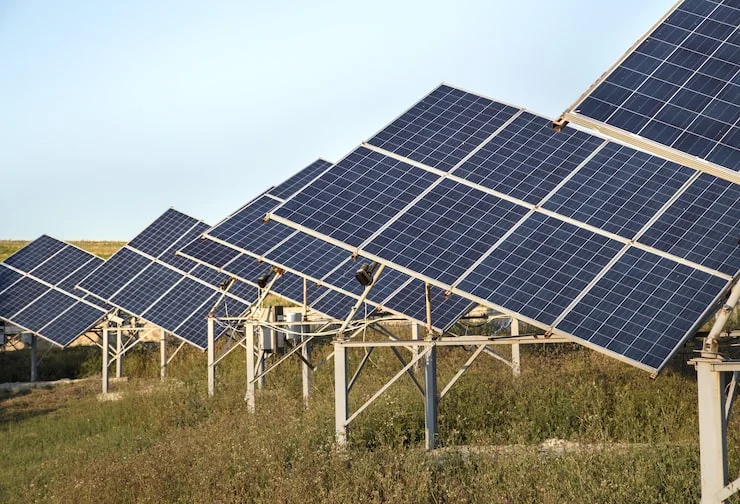
Most solar panels come with a warranty that lasts twenty five years. This does not mean the panel stops working after twenty five years. It means the company promises the panel will still make at least eighty percent of the power it made when it was new. After twenty five years, most panels are still working. They just do not work as well as they used to.
Many panels keep working for thirty years or even longer. Some panels from the nineteen seventies are still making electricity today. But the power they make keeps dropping a little bit each year. This drop is very small. Most panels lose about half a percent to one percent of their power every year.
At some point, the panel makes so little power that it is not worth keeping. The owner might decide to put up new panels that make more power. Or the panel might break and stop working completely. Either way, the panel eventually needs to be taken down and replaced.
This is where the problem starts. We have put up millions of solar panels all over the world. Those panels will all need to be taken down someday. We need to have a plan for what to do with them.
Read Also: Solar Panel Maintenance Tips For Home
The Numbers Are Bigger Than You Think
The number of old solar panels is growing fast. In the year two thousand twenty two, the world had about one million tons of old solar panels. That sounds like a lot. But the numbers for the future are much bigger.
By the year two thousand thirty, experts think we will have about eight million tons of old panels. By two thousand fifty, that number could reach eighty million tons. To put that in perspective, that is like having millions of panels piled up all over the world.
These numbers are big because we have put up so many panels in the last twenty years. Those panels are now reaching the end of their useful lives. The wave of old panels is just beginning. We need to be ready for it.
Some countries are already seeing this problem. In the European Union, they have many old panels that need to be handled. In the United States, the wave of old panels is starting to grow. In places like China and India, the numbers will get big in the coming years.
This is a problem that every country will face. The question is whether we will be ready when the old panels start piling up.
What Happens When Panels Go To The Dump
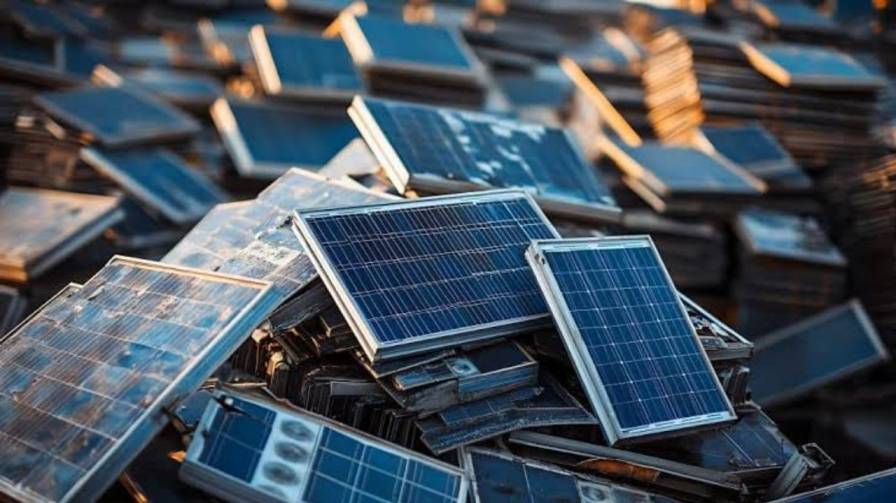
Right now, most old solar panels go to the dump. This is the simplest and cheapest option. Someone takes down the old panels and brings them to a landfill. The panels get thrown in with all the other trash.
This might seem like an easy solution. But it creates several problems. The first problem is space. Solar panels take up room in landfills. They are flat and wide. They do not break down easily. They will sit in the landfill for a very long time.
The second problem is more serious. Solar panels contain materials that can be harmful. They have small amounts of lead and cadmium. These are heavy metals that can be toxic. If the panels break in the landfill, these metals can leak out. They can get into the soil and the water.
The third problem is waste. Solar panels contain many valuable materials. They have aluminum frames. They have silver wires. They have silicon cells that are very pure. When we throw panels in the dump, we throw away all these materials. We have to dig up new materials to make new panels. This is not a good use of resources.
Some countries have laws against throwing solar panels in the dump. In the European Union, they have rules that say panels must be recycled. The United States does not have such rules. Most panels in the US end up in landfills. This is something that many people want to change.
The Parts That Make A Solar Panel
To understand what happens to old panels, we need to know what they are made of. A solar panel is made of several parts. Each part is different and needs to be handled in a different way.
The frame is made of aluminum. This is the metal part that goes around the outside of the panel. Aluminum is strong and lightweight. It is also very easy to recycle. Aluminum can be melted down and used again and again.
The glass covers the front of the panel. This glass is not like window glass. It is specially made to let sunlight through. It is also very strong. The glass makes up most of the weight of the panel. Glass can be recycled, but the glass in solar panels has special coatings that make it harder to recycle.
The solar cells are the heart of the panel. These are made of silicon. Silicon is the same material that is used in computer chips. The silicon in solar panels is very pure. It is expensive to make. It would be good if we could reuse this silicon.
There are also small amounts of other materials. There are tiny silver wires that carry the electricity. There is a plastic backing on the back of the panel. There are copper wires that connect everything together.
All of these parts need to be separated if we want to recycle the panel. This is not easy to do. The parts are glued and sealed together to last for decades. Taking them apart takes work and costs money.
How Recycling Actually Works?
Recycling solar panels is a process. It involves several steps. Each step is designed to separate one part of the panel from the rest.
The first step is taking off the aluminum frame. This is the easiest part. The frame is bolted or glued to the panel. Workers take off the bolts or break the glue. The aluminum frame comes off in one piece. This aluminum is clean and ready to be recycled.
The second step is removing the junction box. This is the small box on the back of the panel. It has the wires that connect the panel to the rest of the system. The junction box contains plastic and copper. These materials are removed and sent for recycling.
The third step is breaking the glass. This is where it gets tricky. The glass is attached to the solar cells with a plastic layer. This plastic layer is very strong. It keeps the panel together for decades. But it also makes it hard to get the glass off.
Some recyclers use heat to separate the glass. They heat up the panel until the plastic melts. The glass then falls away from the cells. This method works but it uses a lot of energy.
Other recyclers use mechanical methods. They grind up the whole panel into small pieces. Then they use different methods to separate the pieces. They might use air to blow away the lighter glass pieces. They might use magnets to pull out the metal pieces. They might use water to wash away the plastic pieces.
The goal is to get clean pieces of each material. The glass pieces should have no plastic stuck to them. The silicon pieces should be clean and pure. The metals should be separated from everything else.
This is hard work. It costs money to do all these steps. That is why many panels still go to landfills. Recycling costs more than throwing them away.
The Problems With Recycling Right Now
Recycling solar panels sounds like a good idea. But there are several problems that make it hard to do.
The first problem is cost. It costs money to take apart a solar panel. The worker has to spend time on each panel. The machines have to use electricity. The process creates waste that has to be handled. All of this costs money.
Recycled materials from solar panels do not make much money. The aluminum is worth something. The copper and silver are worth something. But the glass and plastic are not worth much. The silicon can be worth a lot if it is pure. But the recycling process often damages the silicon. It is not pure enough to use in new panels.
When the cost of recycling is more than the value of the materials, recycling does not make economic sense. Companies do not want to lose money. That is why so many panels go to landfills.
The second problem is that panels are not made to be recycled. The people who make panels think about how to make them last a long time. They use strong glues and seals. They put everything together tightly. This is good for making a panel that lasts. But it is bad for taking the panel apart.
If panels were made with recycling in mind, they would be easier to take apart. The parts could snap together instead of being glued. The glass could be separated more easily. The materials could be labeled for recycling.
Some companies are starting to think about this. They are making panels that are easier to recycle. But most panels today are still the old kind. They were made to last, not to be taken apart.
The third problem is that there are not enough recycling facilities. Most countries have only a few places that recycle solar panels. If someone wants to recycle a panel, they have to ship it to one of these places. Shipping costs money too. The farther the panel has to go, the more it costs.
More recycling facilities are needed. But building a recycling facility costs money. Companies are not sure if they will have enough old panels to keep the facility busy. They are waiting to see how many panels need recycling.
What Is Being Done To Fix The Problem?
People are working on this problem from many different angles. Some people are working on better recycling methods. Some people are working on laws that require recycling. Some people are working on new panel designs that are easier to recycle.
In the European Union, they have a law that says solar panels must be recycled. The law makes the panel makers responsible for recycling. The makers have to pay for the recycling process. This means the cost is built into the price of the panel.
This law has helped a lot. In Europe, most panels get recycled instead of going to landfills. The recycling rate is much higher than in other parts of the world.
Other countries are looking at this model. They are thinking about making their own laws. The United States does not have a federal law yet. But some states are thinking about making their own rules.
Companies are also working on better recycling methods. Some companies have found ways to recycle the silicon. They use chemical processes to clean the silicon. The cleaned silicon can be used to make new panels or other products.
Other companies are working on ways to reuse the whole panel. They take old panels and test them. Panels that still work are sold for use in other places. A panel that might not be good for a house could still be good for a farm or a small building.
Some researchers are working on new types of panels. These panels use different materials that are easier to recycle. Some are using materials that are not toxic. Some are making panels that can be taken apart with just a few steps.
The Future Of Solar Panel Waste
The future of solar panel waste depends on what we do right now. We are at a turning point. The wave of old panels is coming. We can either be ready for it or we can be overwhelmed by it.
If we do nothing, most old panels will go to landfills. The landfills will fill up faster. The heavy metals will leak into the soil. The valuable materials will be wasted. We will have to dig up more materials for new panels. This is not a good future.
If we act now, we can build a better system. We can build more recycling facilities. We can make laws that require recycling. We can design panels that are easier to recycle. We can create a system where old panels become new panels.
This is called a circular economy. In a circular economy, nothing is wasted. Everything gets used again. The aluminum from old panels becomes the aluminum for new panels. The silicon from old panels becomes the silicon for new panels. The glass from old panels becomes glass for new panels.
A circular economy for solar panels is possible. We have the technology. We have the knowledge. We just need to build the system. This will take effort and money. But it is worth it for the environment and for future generations.
Some people are already working on this. Companies are building recycling facilities. Governments are making laws. Researchers are finding new methods. The pieces are starting to come together.
You May Also Like: Biodegradable Products Manufacturers In India
What You Can Do?
You might be wondering what you can do about this problem. There are several things that you can do to help.
If you are thinking about getting solar panels, ask the company about recycling. Ask them what happens to the panels at the end of their life. Choose a company that has a recycling plan. This sends a message that you care about the whole life of the panel.
If you already have solar panels, keep them working as long as possible. Take care of them. Clean them when they get dirty. Fix problems when they happen. The longer the panel works, the less waste we have.
When your panels get old, look for recycling options. Do not just throw them in the dump. Find a recycler in your area. If there is not one nearby, ask your government to do something about it.
Support laws that require recycling. Write to your government representatives. Tell them you want panels to be recycled, not thrown away. Your voice matters.
Conclusion
Solar panels are a great way to make clean electricity. They help us use less fossil fuel. They help us fight climate change. But we need to think about the whole life of the panel. We need to think about what happens when the panel gets old.
Right now, most old panels go to landfills. This is not good for the environment. It wastes valuable materials. It takes up space in landfills. It can leak toxic materials into the soil and water.
But things are changing. People are working on better ways to recycle panels. Some countries are making laws that require recycling. Companies are designing panels that are easier to recycle.
The future of solar panel waste is in our hands. We can choose to build a system that recycles every panel. We can choose to create a circular economy for solar panels. This is the right thing to do for the planet and for future generations.