


Solar Panel Maintenance Tips For Home
I get asked about this a lot. People spend thousands on solar panels. Then they just forget about them. They sit up there on the roof for months. Sometimes years. And then one day, the electric bill looks a little higher than normal. That is when they start solar panel maintenance tips for home.
Did I do something wrong? Is the system broken? Usually, it is just dirt. Plain old dirt.
The Dirt Problem Is Real
I live in a pretty dusty area. Not a desert or anything. But enough dust that my car gets dirty after two days. That same dust lands on my solar panels.
Here is what happens. The dust blocks the sun. Not all of it. Just enough. Your panels might lose 10% of their power. Sometimes 20%. In really bad cases, even more than that.
Think about your glasses. When they get smudged, you can still see. But not perfectly. It is the same with solar panels. A little smudge costs you money. A lot of smudges cost you a lot of money.
I talked to my installer about this once. He told me about a customer who had bird droppings on just two panels. Just two. Her whole system output dropped by 15%. Fifteen percent because of some birds. That is real money over a year.
Read Also: Rainwater Harvesting For Apartments
When Should You Actually Clean Them?
People ask me for a schedule. I do not have one. Neither should you.
Here is what I mean. If you live in Arizona, you clean more often. If you live in Seattle where it rains all the time, you clean less. That is just common sense.
My rule is simple. Walk outside. Look at your roof. Can you see the dirt? If you can see it from the ground, it is too dirty. Clean it.
For me, twice a year works. Once in spring. Once in fall. Spring because of the pollen. Fall because of the leaves. But that is just me. Your house might be different.
A friend of mine lives next to a highway. His panels get black with road dust. He cleans them every two months. He has to. His power bills would be too high otherwise.
Please Be Careful Up There
I am going to say something that might sound obvious. But I mean it.
Do not fall off your roof.
I know that sounds silly. But I read a story about a guy who fell cleaning his panels. Broke his leg. Could not work for three months. The money he saved on electricity did not pay for that.
If your roof is steep, do not go up there. If it is wet, do not go up there. If you feel nervous at all, just hire someone. It is not worth the risk.
Also, do not use cold water on hot panels. I learned this the hard way. Not on my own panels, thank goodness. But I saw a neighbor do it. He sprayed cold water on his panels in the middle of a hot afternoon. One of them cracked right down the middle. He had to buy a new panel. That was expensive.
Clean in the morning. Or in the evening. When the glass is cool.
The Tools You Actually Need
You do not need fancy stuff.
Go to your garage. Get your garden hose. Get a soft cloth. Get a little dish soap. That is it.
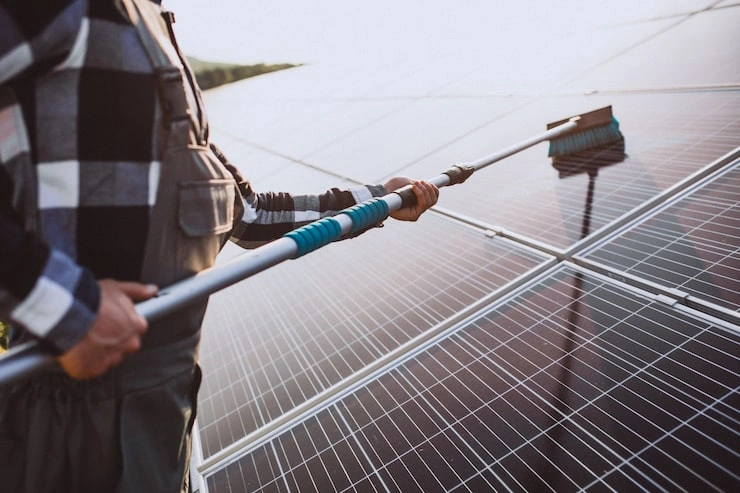
I use a long broom handle with a soft cloth tied to the end. Works fine. Cost me nothing.
One thing I do not use is a pressure washer. Those things are too strong. They can push water into the panel seals. Once water gets inside, the panel is ruined.
Another thing I do not use is Windex or glass cleaner. The chemicals are too harsh. They leave a film. That film actually attracts more dirt later.
Just water. A little soap if you need it. That is all.
The Right Way To Do It
Start from the top. Work your way down.
Spray the panels first. Get the loose dirt off. Then gently wipe with your cloth. Do not scrub hard. I know it is tempting. But the glass has a coating on it. If you scrub hard, you scratch that coating. Scratches also block sunlight.
Rinse well. Make sure all the soap is gone.
If you have hard water like I do, use a squeegee. Hard water leaves spots. The spots look like little white dots. They can build up over time. A squeegee stops that.
What Else You Should Look At?
Cleaning the glass is not everything. There are other things up there.
The Inverter Box
Most people do not even know what their inverter looks like. It is usually on the side of the house. It has a little screen or some lights.
Look at it once a month. If the lights are green, you are fine. If they are red or yellow, something is wrong. If the screen has an error code, call someone.
Also, dust gets in the vents of the inverter. If the vents are blocked, the inverter overheats. Overheating kills inverters. They cost over a thousand dollars to replace. Clean the vents gently. Use a soft brush.
Trees
Trees grow. Faster than you think.
A branch that was not casting shade last year might be casting shade now. Shade is bad. Even a little bit of shade on one corner of one panel can cut the output of the whole string of panels.
Go outside. Look at your roof from different angles. If you see branches getting close, trim them. I trim mine every fall. It is just part of my routine now.
Animals
Birds love solar panels. The space under them is warm. It is dry. It is protected from the rain.
I had pigeons under my panels last year. They made a huge mess. Their droppings covered the panels. They also chewed on some wires. I did not know about the chewed wires until my system stopped working.
I had to call a professional to remove the birds. He also put up wire mesh around the edges. No birds can get under there now. It cost me a couple hundred dollars. But it was worth it.
You May Also Like: Biodegradable Products Manufacturers In India
When You Must Call A Professional?
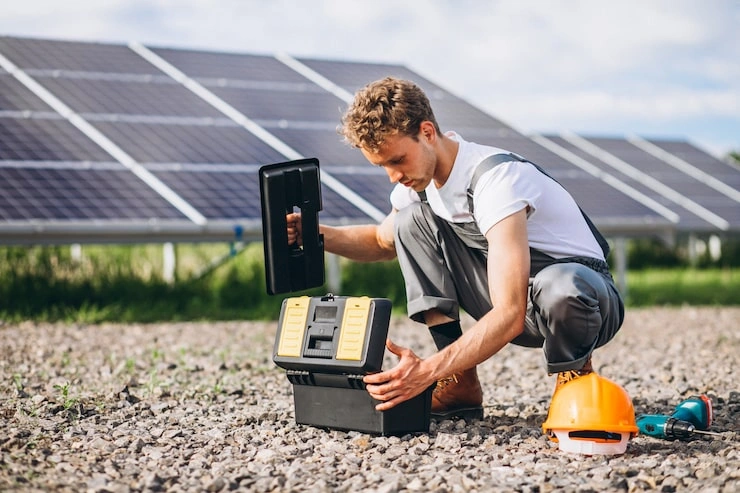
Some things are not DIY.
If you see a crack in the glass, call someone. Do not touch it.
If your power output drops a lot and you do not know why, call someone.
If you have a flat roof, call someone. Water pools on flat roofs. The dirt that pools with the water is thick and sticky. You cannot clean it with a hose. You need special equipment.
I call a professional every two years. He comes out. He checks all the electrical connections. He tests the system. He makes sure the mounting brackets are tight.
It costs around three hundred dollars. That seems like a lot. But compared to the twenty thousand dollars I spent on the system, it is not. It gives me peace of solar panel maintenance tips for home.
What About The Warranty?
This is important. I almost missed this myself.
Your warranty might require you to maintain your panels. Some warranties require professional service records. If you do not have those records, they might not replace a broken panel.
Read your warranty papers. If you cannot find them, call your installer. Ask them what you need to do to keep the warranty valid.
I keep a folder. I write down every time I clean my panels. I write down the date. I write down what I did. If I hire someone, I keep their receipt. This folder has saved me before when I had a warranty claim.
How Much Does All This Cost?
If you clean yourself, it costs nothing. Just your time.
If you hire a professional to clean, it is usually between one hundred fifty and three hundred thirty dollars per visit. If you get a yearly service plan, it is around three hundred to eight hundred fifty dollars per year. That includes cleaning and inspections. I do the cleaning myself. But I pay for the inspection every two years. That works for me. You have to figure out what works for you.
Conclusion
Your solar panels are not like other things in your house. They sit outside in the weather every single day. Rain. Snow. Heat. Cold. Bird poop. All of it. They work hard for you. They make electricity. They lower your bills. They help the environment. The least you can do is take care of them. It does not take much time. It does not cost much money. But it makes a big difference over the life of your system.
I have had my panels for eight years now. They still work like the day they were installed. I clean them twice a year. I check the inverter once a month. I trim the trees in the fall. I call a pro every two years. That is it. Nothing complicated. Nothing expensive. Just simple habits. Your panels will last twenty-five years or more if you do these things. That is a long time. A long time of free electricity. A long time of savings.